Choosing an omega-3 supplement is about more than finding the largest number on the front of the bottle. Two supplements can contain similar amounts of oil while differing considerably in their actual EPA and DHA content, sourcing, manufacturing standards and testing practices.
Third-party testing can provide another layer of quality control by involving an independent laboratory in the evaluation of a supplement or its ingredients. However, the phrase "third-party tested" does not automatically mean that a product carries a formal third-party certification, and not every testing program examines the same parameters.
If you are comparing omega-3 supplements, the best approach is to look beyond broad terms such as "premium," "high potency" or "pure." Read the Supplement Facts panel, check which omega-3 fatty acids are quantified, review information about sourcing and manufacturing, and understand exactly what the company's testing claims mean.
Key Takeaways
Third-party testing can help verify aspects of an omega-3 supplement's identity, potency or quality, but the scope of testing varies between products and laboratories.
Third-party testing and third-party certification are not the same thing. A supplement may undergo independent laboratory testing without carrying certification from organizations such as NSF or USP.
The total amount of oil in a supplement is also not the same as the amount of omega-3 it provides. Comparing DHA, EPA and, when available, DPA per serving gives a much clearer picture of the formula.
Purity should not be treated as a single marketing claim. Sourcing, contaminants, manufacturing standards, oxidation and ingredient transparency can all play a role in evaluating omega-3 quality.
What Does "Third-Party Tested Omega-3" Actually Mean?
A third-party tested omega-3 supplement has been evaluated by an external laboratory or organization rather than relying exclusively on testing performed internally by the company that manufactures or sells it.
The important question, however, is not simply whether a product has been tested.
It is what was tested.
Depending on the laboratory and the testing program, analysis may include ingredient identity, fatty-acid concentration, contaminants or other quality parameters. Some companies test finished products, while others may test raw materials or individual ingredients.
When researching an omega-3 supplement, useful questions include:
-
What does the third-party testing evaluate?
-
Is the finished product tested?
-
Is testing performed on every batch or periodically?
-
Are EPA and DHA levels verified?
-
Are contaminants evaluated?
-
Is oxidation evaluated?
-
Does the product carry an independent certification, or is it independently laboratory tested without certification?
These distinctions make it easier to compare products based on meaningful information rather than a single phrase on the label.
Third-Party Testing vs. Third-Party Certification
Third-party testing and third-party certification are related concepts, but they are not interchangeable.
A supplement can undergo independent laboratory testing without being part of a formal certification program.
Certification programs generally operate according to a defined set of requirements. Depending on the organization, these may include laboratory analysis, manufacturing reviews, documentation requirements and ongoing monitoring.
Organizations such as NSF and USP, for example, operate dietary supplement verification or certification programs with their own specific requirements.
That does not mean a supplement described as third-party tested is automatically NSF Certified or USP Verified.
If a certification is important to you, check the exact certification carried by the product rather than assuming that independent testing and certification mean the same thing.
Why Does Purity Testing Matter for Omega-3 Supplements?
The term "purity" is frequently used in supplement marketing, but it can mean different things depending on what is being measured.
For omega-3 supplements, quality evaluation may involve several separate considerations:
-
Does the product contain the fatty acids listed on the label?
-
Are they present in the stated quantities?
-
Are relevant contaminants evaluated?
-
Is the oil protected from excessive oxidation?
-
Are manufacturing and sourcing practices clearly disclosed?
Rather than searching for the supplement that claims to have the "highest purity," it is more useful to compare measurable information.
A product with transparent Supplement Facts, clear sourcing, independent testing and detailed manufacturing information gives consumers considerably more information to work with than a product that simply describes itself as "pure."
What Should Third-Party Omega-3 Testing Check For?
There is no single universal testing protocol used by every omega-3 manufacturer. However, several areas are particularly useful when evaluating product quality.
Ingredient Identity and Potency
One of the most important things to check is whether the product clearly states how much omega-3 it actually provides.
For example, a supplement might contain 1,000 mg of oil without providing 1,000 mg of omega-3 fatty acids.
The Supplement Facts panel should therefore be the starting point when comparing products.
Look for clearly disclosed amounts of:
-
DHA
-
EPA
-
Total omega-3
-
DPA, when included in the formula
-
Serving size
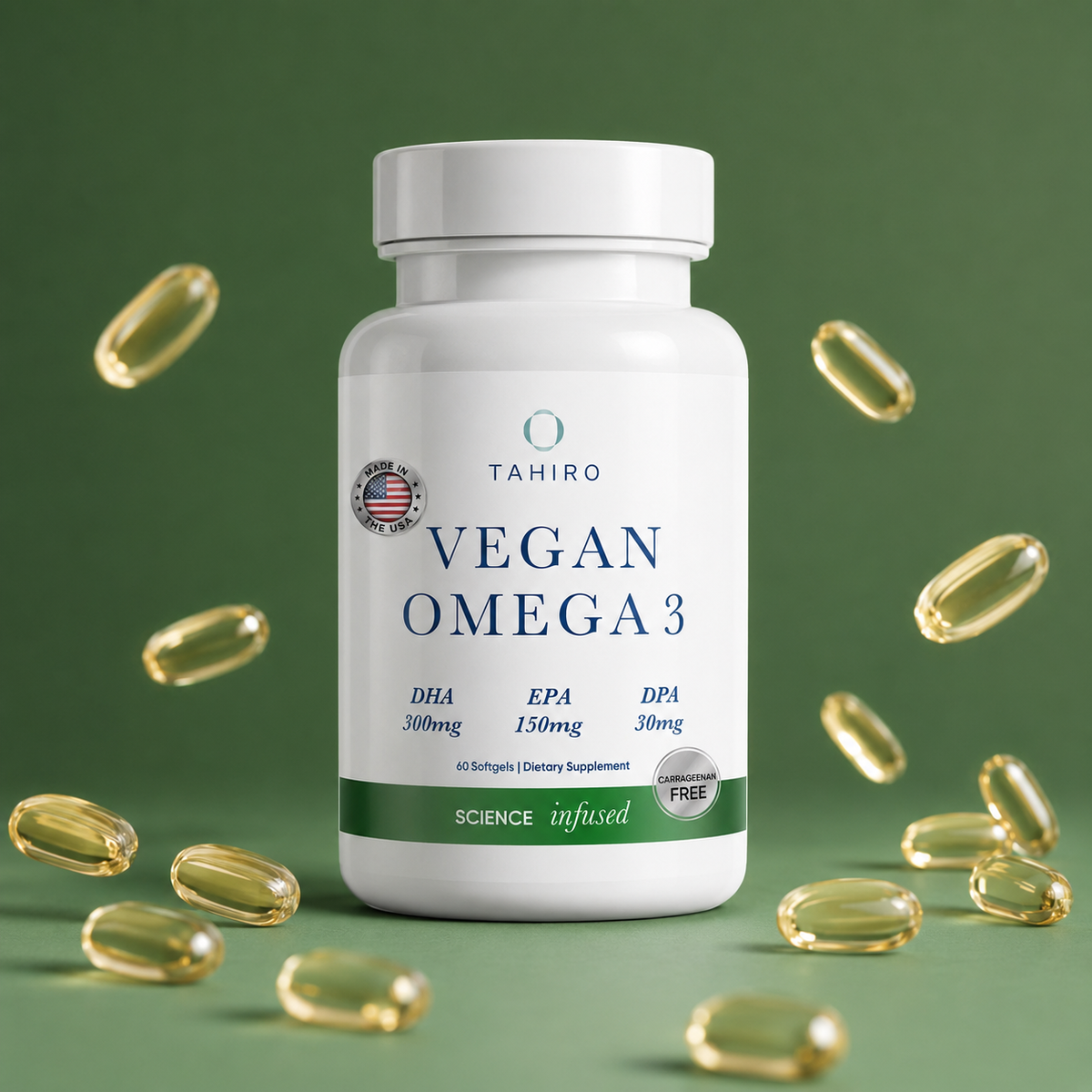
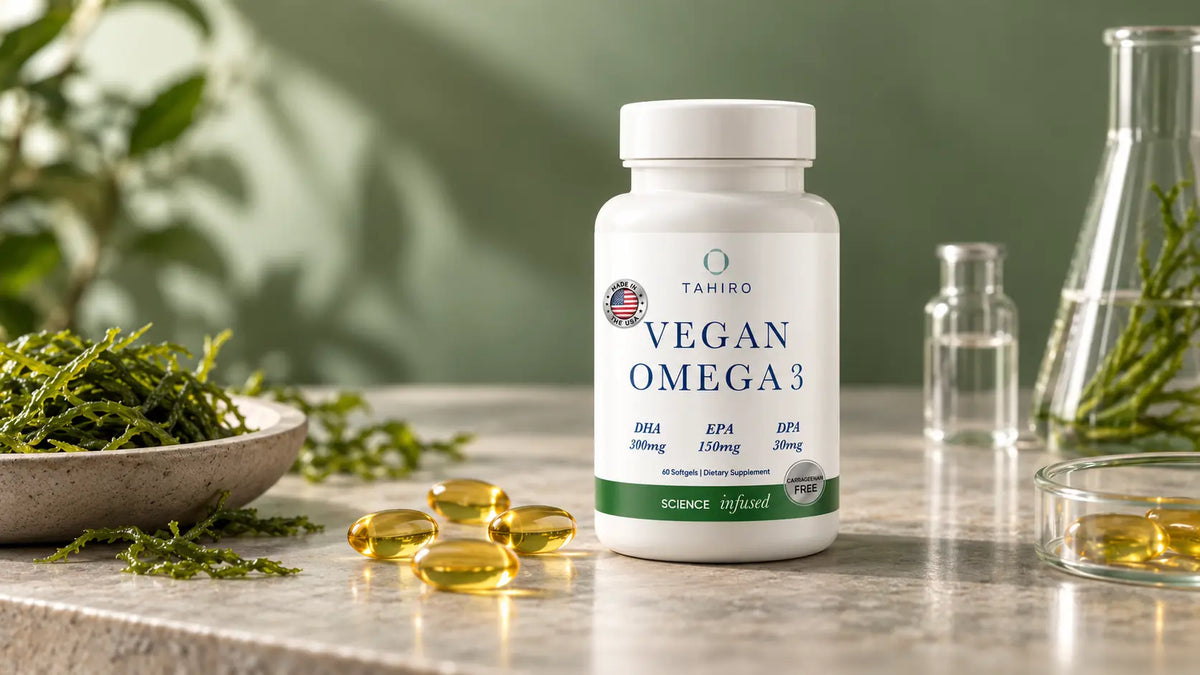
Our Algae Omega 3 lists DHA, EPA and DPA separately on the Supplement Facts panel rather than presenting only the total amount of algal oil.
This makes it easier to understand the actual fatty-acid profile and compare it with other products.
Heavy Metals and Other Contaminants
Contaminant testing is another area consumers may want to consider when evaluating an omega-3 supplement.
Depending on the product and testing program, this can include analysis for substances such as heavy metals and other unwanted contaminants.
It is important not to assume that every product described as "third-party tested" has been tested for exactly the same substances. The scope of the testing matters.
Algae-based omega-3 also provides a different sourcing model from fish-derived oils. Rather than obtaining omega-3 from fish within the marine food chain, algae can be cultivated in controlled environments.
Our marine algae are grown in the United States under controlled conditions.
What About Oxidation Testing?
Omega-3 fatty acids are polyunsaturated fats and can be susceptible to oxidation.
Oxidation is therefore another useful consideration when assessing the quality of an omega-3 oil.
You may encounter the term TOTOX, or Total Oxidation Value, when researching omega-3 supplements. TOTOX is used as an overall indicator of oxidation by combining measurements associated with primary and secondary oxidation.
Our Algae Omega 3 is tested for oxidation using TOTOX.
When comparing other omega-3 products, check whether the manufacturer provides information about oxidation or freshness testing rather than assuming all oils are evaluated in the same way.
Where Can I Find Algae Omega-3 Supplements With Third-Party Testing?
If you are looking specifically for an algae omega-3 supplement with third-party testing, start with the manufacturer's product information and Supplement Facts rather than relying only on marketplace listings.
Look for details about:
-
Independent testing
-
Algae sourcing
-
DHA and EPA content
-
DPA, if included
-
Manufacturing standards
-
Contaminant testing
-
Oxidation testing
-
Capsule ingredients
-
Other ingredients
Our Algae Omega 3 is made from marine algae cultivated in the United States under controlled conditions, and each batch undergoes third-party testing.
It is also manufactured in the United States in an FDA-registered facility operating according to GMP standards.
An important distinction: manufacturing a supplement in an FDA-registered facility does not mean that the individual supplement has been approved by the FDA. Dietary supplements are not approved by the FDA before being marketed in the same way prescription drugs are.
Where Can I Find Vegan Omega-3 Supplements With Third-Party Testing?
For vegan omega-3 supplements, the evaluation process is similar, but there is one additional factor worth checking: the source of the omega-3 fatty acids.
Many plant foods contain ALA, while algae oil can provide preformed long-chain omega-3 fatty acids such as DHA and EPA.
That means the word "vegan" by itself does not tell you how much DHA or EPA a supplement contains.
When comparing vegan omega-3 products, check:
-
The source of the omega-3
-
DHA per serving
-
EPA per serving
-
DPA, when included
-
Third-party testing information
-
Manufacturing information
-
Capsule ingredients
-
Other ingredients
Our formula is algae-based and vegan and provides DHA, EPA and DPA, with the amounts of each listed separately on the Supplement Facts panel.
Each batch also undergoes third-party testing.
How Do You Find a DHA Omega-3 Supplement With Reliable Purity Information?
If DHA is your priority, avoid choosing a product based only on a large number displayed on the front of the bottle.
Instead, check how much DHA the supplement actually provides per serving.
It is useful to compare:
-
DHA per serving
-
EPA per serving
-
Total omega-3
-
Serving size
-
Oil source
-
Independent testing
-
Manufacturing information
-
Oxidation information, when available
(Not sure how the two fatty acids differ? Read our guide to [EPA vs. DHA] for a closer look at their roles, sources and differences.)
This prevents a common comparison mistake: treating the total amount of oil as though it represents the amount of DHA.
They are not the same measurement.
For example, two products may both contain 1,000 mg of oil but provide very different amounts of DHA and EPA.
Which EPA Omega-3 Products Have Third-Party Testing?
EPA content and testing quality should be evaluated separately.
A product can contain a high concentration of EPA without providing extensive information about its testing practices. Likewise, another supplement may provide a different EPA concentration while offering more detailed information about sourcing, manufacturing and testing.
A useful comparison therefore looks at several factors together:
EPA + DHA + other omega-3 fatty acids + source + testing + manufacturing information
rather than using EPA concentration alone as a measure of overall quality.
Our algae-based formula contains EPA alongside DHA and DPA, with each fatty acid identified separately on the label, and every batch undergoes third-party testing.
How Can You Find a DHA Omega-3 Supplement With the Highest Purity?
"Highest purity" is difficult to evaluate unless multiple products have been analyzed according to exactly the same testing methodology.
For that reason, we recommend looking at measurable and verifiable information instead of trying to identify a single "purest" product.
When comparing DHA omega-3 supplements, check:
-
DHA content per serving
-
Source of the oil
-
Independent testing
-
Manufacturing standards
-
Contaminant information
-
Oxidation testing, if disclosed
-
Ingredient transparency
The goal should be to understand how the product is made and evaluated rather than relying on an undefined purity claim.
What Is a Certificate of Analysis?
A Certificate of Analysis, or COA, is a document containing laboratory results or specifications related to an ingredient or finished product.
Depending on the analysis, it may contain information about areas such as:
-
Identity
-
Potency
-
Contaminants
-
Other product specifications
A COA should not automatically be interpreted as proof that every possible quality parameter has been tested.
If a manufacturer provides a COA, look at which batch it applies to, which laboratory performed the analysis and what was actually measured.
How to Choose a High-Quality Algae Omega-3 Supplement
There is no single claim that can tell you everything about an algae omega-3 supplement.
A better approach is to look at the complete picture.
Start by checking the actual amounts of DHA and EPA rather than just the quantity of algal oil.
Then look at where the algae are grown, whether the manufacturer provides third-party testing information, where the finished supplement is produced and what other ingredients are included.
If DPA is part of the formula, check whether its amount is disclosed separately.
Finally, consider whether the company provides information about factors such as oxidation and contaminant testing.
The more specific and measurable the information, the easier it becomes to compare products on something more meaningful than marketing terminology.
Does Our Algae Omega-3 Undergo Third-Party Testing?
Yes. Every batch of Tahiro Algae Omega-3 undergoes third-party testing, including TOTOX oxidation testing.
The algae are cultivated in the United States under controlled conditions, and the finished supplement is produced in the United States in an FDA-registered facility operating according to GMP standards.
The formula contains DHA, EPA and DPA, with their individual amounts disclosed on the Supplement Facts panel.
We do not describe the product as NSF Certified or USP Verified because those are separate certification programs and should not be confused with independent third-party testing.
The Bottom Line
Third-party testing can be a useful part of evaluating an omega-3 supplement, but it should not be viewed in isolation.
Look at the actual DHA and EPA content, the source of the oil, whether additional omega-3 fatty acids such as DPA are disclosed, manufacturing information, testing practices and any available information about contaminants and oxidation.
Most importantly, favor specific, verifiable information over broad claims such as "premium" or "highest purity."
For algae and vegan omega-3 supplements in particular, transparent sourcing, a clearly disclosed fatty-acid profile and independent testing can make it much easier to understand exactly what you are getting.